An Investigation into Using Enamel Flux on Copper (Part 3)
- Details
- Parent Category: Technical Articles from Journal Back Copies
- Category: Technical Articles 2005
Raymond Jackson
Surface Preparation
Thus far, the surface of the copper had been annealed, pickled and then abraded using a glass fibre brush. This produced a matt reflecting surface for the fired enamel flux. I now tried other treatments to the copper surface. Incidentally, I found from experience how important it is, after pickling, to wash the copper thoroughly to remove all traces of chemical. One effective treatment is a light scrub with a toothbrush dipped in ammonia to which has been added a few drops of detergent. I followed this by washing in hot running water until the water no longer formed droplets but shed from the surface.
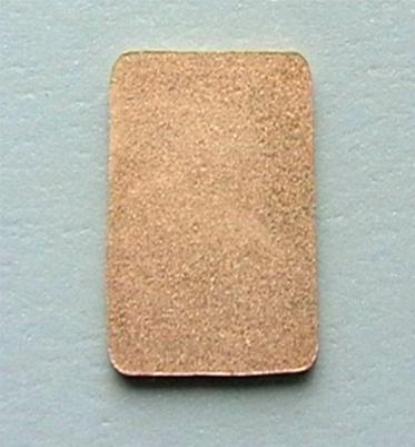
I now modified this process further having studied the article by Carpenter 6 on metal preparation. After the pickling to remove the oxides after annealing, I dipped the samples in a warm 25% solution of bright dip or aqua fortis for two to three minutes. This removed any trace of remaining oxide and initially attacked the copper itself. This made the copper brighter, a little more yellow in colour and according to Carpenter produces a smoother surface with the grain boundaries not very evident - see Figure 7.